

Not every "no" is the same
On rejection, what it actually means, getting "over it"

I was talking recently with Ben Blacker for his (very good) podcast The Writer’s Panel — and he asked a (very good) question about handling difficult moments in what is already a very difficult career. It reminded me of a Hollywood story I hadn’t thought of in a while (coping mechanism).
When I was still very fresh faced to Hollywood, I got paired up with a Very Important Writer, who had a cool idea for a TV show. The VIW had just been nominated for a Very Important Award and so it really felt like “This Person Can Do No Wrong.” Together, we sold the show. The Very Important Writer’s idea, with me writing it. VIW too busy (and too expensive). Classic.
However, it immediately became clear that the people we had sold this idea to were not in fact that interested in it. Whether they’d never considered what it would actually look like, or had no idea what it would actually look like, or just didn’t like that kind of show (familiar) it very quickly became a vortex in which no version of it that I proposed in an outline / series document was appealing to them. This went on for months, before, ultimately, my dear agents and mangers called me to say “They’re pulling the plug on this. They’re going to try a different direction.” Different direction? We never even picked the first direction! We stalled out before I was even allowed to write a draft of a pilot.
It was all one long, attenuated, unnecessarily confusing “No.” It was particularly brutal.
But I am here to tell you, with more experience under my belt:
It never really gets easier to hear “No.”
And I’m not entirely sure that it should, either.
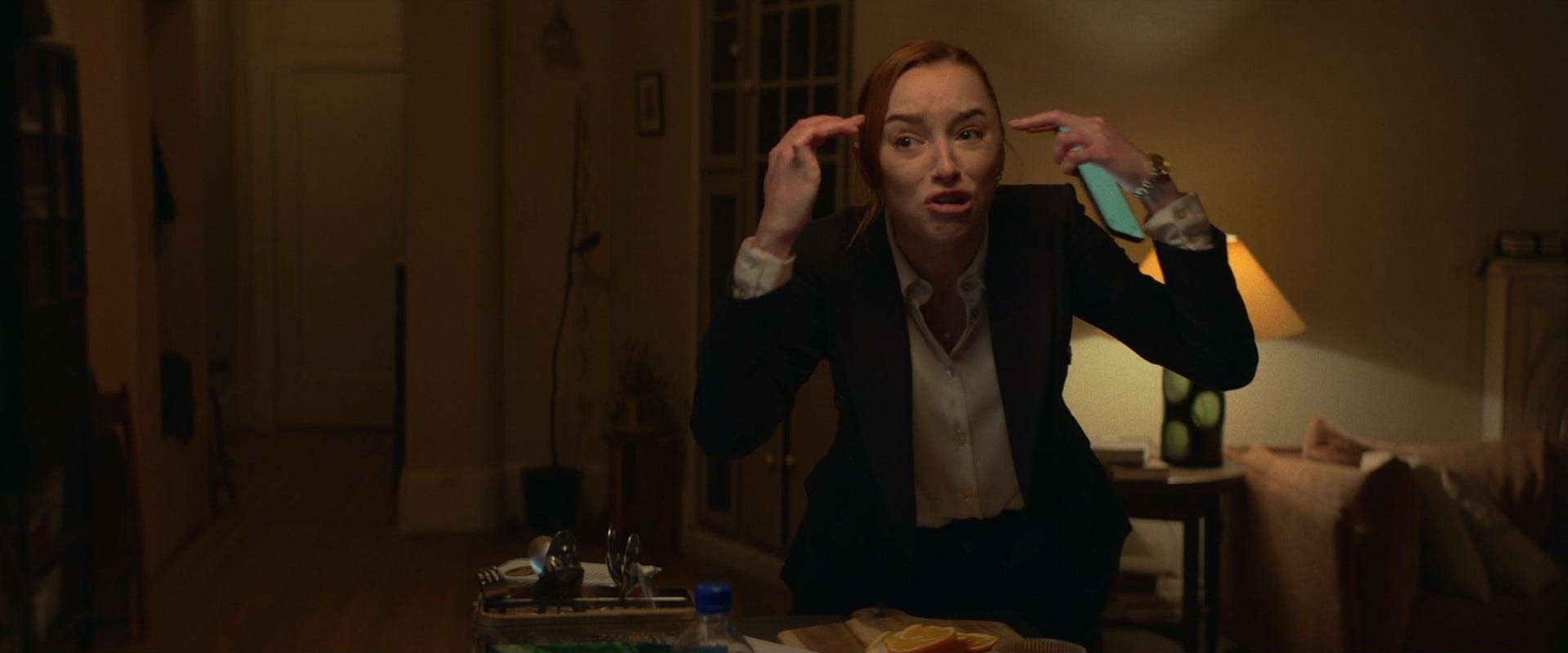
There’s an underlying tension to this job, which I just keep saying, over and over, but is true — Hollywood is where commerce meets art.
[Feels like I should make a bumper sticker of my “catchphrase” that depicts two cars crashing into one another or something.]
And in order to truly make a good piece of art, you really do have to care. A tremendous amount. It takes hundreds of hours to make something interesting, and it takes an incredible amount of conviction. This is all operating in the “art” portion of the car crash.
Then there’s the “commerce.” Over in the commerce car, it’s best to practice a kind of business-brained zen style of non-attachment. “Whatever happens, who cares? I hear yes, I take more chances. I hear no, I take more chances.”
So while I do believe that THE MOST IMPORTANT SKILL to make it in Hollywood is the ability to put yourself out there, to say “hello, here I am, please give me a shot!” I think the second most important skill — because you will inevitably need it five seconds after asking for said opportunity — is the ability to handle that rejection.
Over and over and over again.
If you’re going to set yourself up for a lifelong career of rejection, we need to find some coping mechanisms.
Here’s one that has helped me tremendously.
Remember, there isn’t just one type of “No.”
Not all Nos are the same, even though it might feel easy to jump to the same conclusion upon hearing it — “they hate it, they hate me, it sucks, I suck, I should give all of this up and become an Alaskan Crab Fisherman.”
That’s probably not entirely true. And it’s probably not the best career pivot.
There are many reasons to be rejected, and, honestly, most of them having nothing to do with you and whether or not you suck.
Here are some of the most common to keep in mind:
The “timing” no. This is the most common and the most invisible. The project passed because the slate was full, the budget changed, someone across town just set up something similar, the executive who championed you got fired, the market shifted. The work had nothing to do with it. You will almost never know this is the reason, which makes it particularly maddening, because you're left trying to diagnose a problem that isn't actually a problem with your work. It’s also the most vast category — one that entails basically all logistical reasons NOT to do a movie, and there are A LOT of reasons not to do any given thing on any given day.
The “it's not for me” no. Taste mismatch. Completely valid on both sides. This one stings because it can feel like a verdict, but it's really just a compatibility issue. You sent the right thing to the wrong person. The goal is to find your people, and your people are not everyone. There are some things we simply do not vibe with. This one is a bit insidious because it can be easy to hear that someone doesn’t vibe and have that “harsh your vibe.” Maybe this uptight business person wasn’t feeling particularly whacky when you sent them your gonzo anti-establishment satirical comedy. Doesn’t mean we don’t need gonzo comedies, you just need to find people who are going to get it.
The “the work isn't ready” no. The hardest one to receive, and the most valuable one if you can actually hear it. When someone takes the time to tell you why — specifically why — they passed, that's a gift, even if it doesn't feel like one at the time. The notes inside a rejection from someone with no stake in flattering you are sometimes the most honest feedback you'll ever get. And often managers / agents / producers will insulate clients from this feedback. I don’t think that’s wise! Share the feedback. It might help unlock something, or it might start to sink in — “This one just isn’t working.”
Now, I’m not saying you need to sit down and try to suss out with each and every rejection what kind of no you’ve received. More than anything it’s simply about remembering with each and every “No thanks” that they aren’t all in category 3, aka “this kinda sucks right now” — in fact, they mostly aren’t!
Most things are simply… not about you at all.
That series they chose to go in a different direction on? Never happened. Maybe it was bad timing. Maybe it was not for me. Maybe it sucked. We’ll never know.
You know how I ultimately got over that job? I wrote something else that I could send out and hear yes / no about. Much more No than Yes, always.
So I would never say “toughen up.” I would never say “get over it” or “rub some dirt on it” or any other toxic takeaway of Brené Brown’s grit speech. Instead I’d say, be pissed off. Be annoyed. Be hurt. But set a timer on it, start the next thing, and get back out there. There are plenty more No’s waiting for you. I have a million in a google document somewhere, you can have some of mine.
[I actually have written more about tolerating disappointment before, and I do of course in that article say “rub some dirt on it.” Toxic Brené Brown Stan Mode Activated.]
What about you? How do you handle the no? What actually helps, and what do people tell you should help that doesn't? I'd love to hear it in the comments.


Ooof, did I need this one today. Your opening story just happened to me and a co-writer, not with a VIW, but other than that, word for word. Brutal. And exhausting. All that attention for months and months, for a tiny upfront payment that's long gone. All to get to an "eh never mind." We're taking a beat, mourning the project that could've been. And then we'll get together and see what we want to do next. Hopefully we'll make something cool and this will be a distant memory. But right now, it sucks and feels awful and I can't wait for this feeling to go away.