


I’ve been watching what I like to call “sad fake dad movies.” I have a pitch for a movie I’ve been taking out that runs on this dynamic -- emotionally scarred man forced by circumstance to become a father figure to someone he’s been tasked with protecting. And while I’ve had the basic premise and plot and pitch structure (see a few weeks ago) locked down for a while now, I didn’t feel like it was quite landing as I’d hoped in my first few pitches.
So I wanted to look at the genre comps to see what they had figured out that I hadn’t yet. And it served as a very good reminder of the best/worst thing about revisions.
The endings worked because of their beginnings.
Usually when an ending isn't landing, the real issue is further back — you haven't put your hero far enough away from where he needs to end up. In my pitch, our hero gets handed a job, discovers it's not what he signed up for, and reluctantly agrees to see it through. Perfectly functional but I was sort of skipping over act one to get to the good stuff.
Then I re-watched the beginning of Children of Men.
Such an elegant (and very sharp!) way into the world and the protagonist. It takes some the lame news coverage required to give us the backstory we need to understand the world, and uses it as an incredible demonstration of who our protagonist is in opposition to everyone else. The entire world is glued to the television screen, while he pushes his way through to get a coffee and then to get out of there to pour some whiskey into it. Extremely clean and simple characterization. We now know everything about this guy. Suffering. In pain. Drinking to cope. Thinks he’s better at dealing with the pain of the world around him than these other saps glued to the TV. BOOM.
Here’s the opening of Logan.
Another classic Bad Fake Dad story. Drunk Wolverine old, tired, empty whiskey bottle next to him in the backseat of a car. His legs don’t work well anymore. Comes out to see guys trying to steal his tires. Dragged into a fight he clearly doesn’t want. Cue tired old Wolverine action scene.
Man on Fire has a cold open showing Mexico City’s kidnapping problem in an insane Tony Scott music video style, but the first scene introducing our protagonist, Creasy (what a name for a bedraggled reluctant hero) shows him riding through the US-Mexico border in the back of a cab, sweating, bearded, drinking from a flask, watching the world with total detachment.
The takeaway, reduced to its ugliest, simplest, “sharpest” version:
Your hero needs to be really fucking beat down.
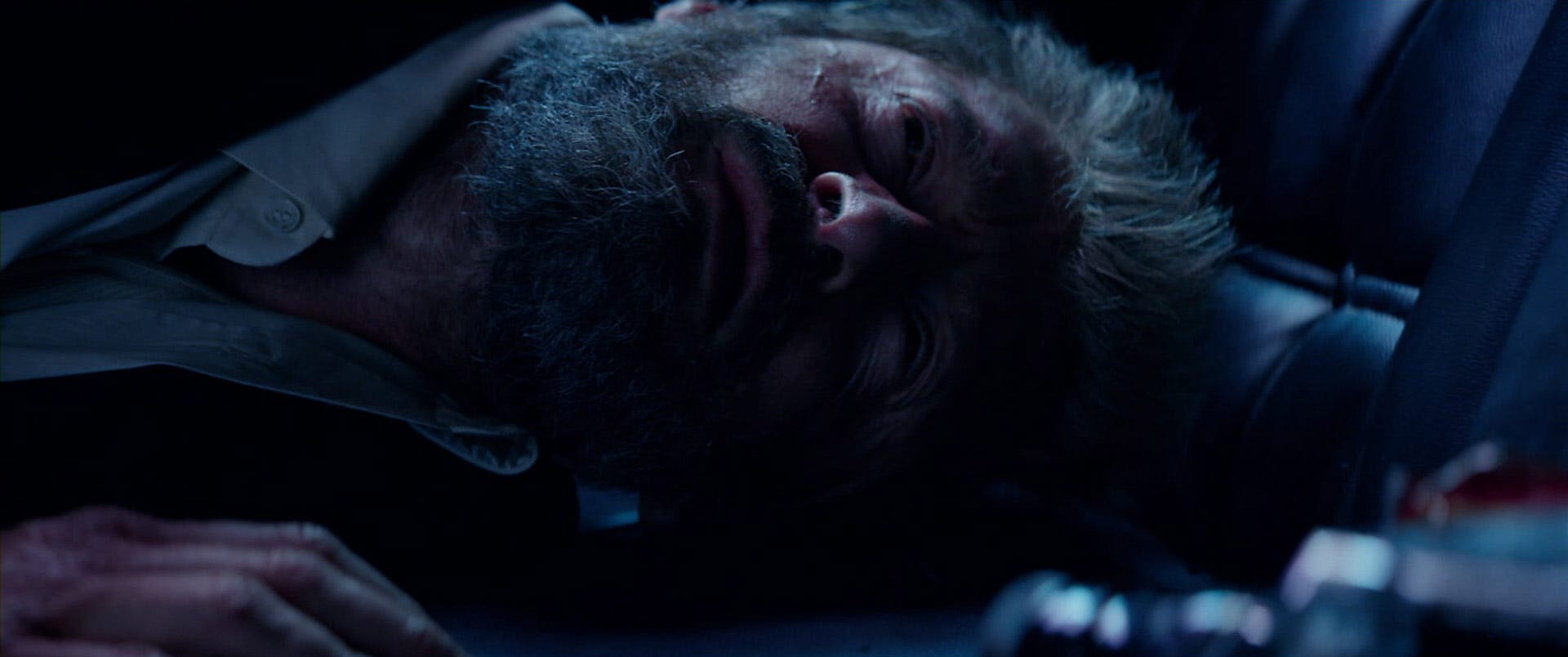
Not just emotionally — visibly. The scars have to show up onscreen. Drinking, disability, discomfort, decay. Pain that’s legible in a single shot, not backstory you have to explain.
What about the ending? If we’re looking at the best way to sharpen an arc, shouldn’t we be pulling both beginning and ending further apart? Yes!
My original ending had the hero get his charge to safety and lose everything doing it — but the two of them were separated when it happened. It felt intellectually satisfying but (and this is a big but) not emotionally satisfying. Part of that’s what the beginning establishes, but part of that is a simple question of geography.
Let’s look at the comps again, [Spoilers for these three old movies]:
In Children of Men he sacrifices his life, in the life boat with the girl.
In Logan he sacrifices his life, in the woods, fighting for her, in front of her.
In Man on Fire he sacrifices his life, eyes on the girl the entire time.
In every version, the sacrifice happens with the person it's for, not apart from them. My movie separated the hero and the person he was protecting. Two people having two separate emotional experiences instead of one shared, devastating one.
Again, feels obvious in hindsight, but again, was not clear to me as I originally was plotting this out.
So I sat down to re-outline the movie. To sharpen our hero’s introduction — and to do it in a way where we can physically see his world-weariness and pain manifest on screen. I revised so that his choice to get involved is active, not accidental, and rebuilt the ending so the sacrifice happens in the same room as the person it's for — the direct, inevitable consequence of the choice he made at minute five.
It’s a lot of rebuilding, actually.
Because a sharper, more specific opening meant a clearer characterization for the lead, which means there were more specific (and more painful) things I could do to our hero throughout the second act to up the stakes. Which made the back half of the second act much cleaner and sharper.
And while we’re looking at the back half… I again compared to the comps. In Logan they get a moment of respite at a farm before the baddies show up and end up killing everyone they just got to know and like. In Children of Men they arrive at their prison camp destination and the woman who’s been helping is captured and [presumably] killed. In Man on Fire everyone’s getting shot and killed the whole movie. Why wasn’t anyone in my film being killed in the second act? Shouldn’t someone be? Could someone be?
The answer, of course, was yes. And it made it cleaner, clearer, and sharper. The low point felt lower, the push to get to the final climax felt easier… It just… worked better.
Is all of this just riffing on genre tropes? Yes, somewhat. But riffing on genre tropes will a) show you what isn’t working yet and b) give your audience a version of what they’re expecting.
s that because those genre tropes work, and are kind of what we expect when we buy a ticket to a movie in that genre? Also yes.
So let’s check in on what changed here.
Changed the first act.
Changed the beginning of the second act (ripple effect of how our hero commits to the adventure of the story).
Changed the back half of the second act.
Changed the third act.
Same movie, but it is just so much sharper.
The outline's better now. People are responding to the pitch differently. Not because the story changed, it didn’t really — but because it got clearer.
One more thing. Next Wednesday, August 5th, is the next Hollyweird Hang — the monthly live Zoom Q&A for paid subscribers.
Bring your outline problems, your ending problems, whatever’s not working or you have questions about.
Whether you want to dig in on craft, career, or heck, picking good comps, I’ll tell you what I think.
If you’re not a paid subscriber yet and want in, you can upgrade your subscription to the newsletter here to get access to this month’s zoom and recordings of all the Hangs.