

Your job is not to transcribe
How to tell if it's a notes problem or your reps just aren't into you anymore

Hello there Hollyweirdos.
I received a question from Phil this week at that we discussed at the Hollyweird Hang on Wednesday that I keep thinking about. I have often written here about how filmmaking exists at the intersection of art and commerce, and I think this is a great case study for exactly that intersection.
Without getting in the weeds, Phil is working on a genre spec and his reps have hit him with the classic Hollywood note… “Can’t the script just open with the good stuff?”
In this instance, that’s “couldn’t the script begin with a strong demonstration of the genre elements of the project?” They want something big and flashy right away. Our writer wants to take his time, establishing the world and character, so that when the cool stuff happens it’s more emotionally meaningful.
So the question is…
Who’s right?
The annoying thing about art is… nobody. Or both sides. Depends.
The commercial case for “just getting to it” is a strong one. Readers are always skimming, always looking for an excuse to set this one down. Try to imagine your reader is on the treadmill after work, or sitting in a car on the way back from a drinks meeting. If they don’t know what’s going on by page 5… they’re not interested.
The creative case for withholding, and using the time to establish character is also real. We hate something that feels predictable, stale, trope-y. Neither side is necessarily wrong… Which means the answer isn’t “listen to the notes” nor is it “listen to your heart.”
It’s the secret, third choice that exists at the intersection of art & commerce.
Do both.
Can you find a specific, genre-leaning image or moment? A mood setting tonally loaded way to indicate genre without being generic?
Your reps are not wrong. We need to know what kind of movie/show we’re in for, pretty darn early. But figuring out a way to do that that is still artistically satisfying to you the artist… that’s the real work of being a professional writer.
This is worth saying now — the notes that are about “selling” the thing (which are by and large going to come from reps and execs) are not the enemy. They are the necessary tension of working in this very very very expensive medium. Learning to live within that tension, is what separates the pros from the not quite pros.
Phil’s situation, like many notes situations, is solvable, by focusing on the “spirit of the note” or the “note behind the note” rather than the note itself.
Kaitlin, who also asked a question at the Hang, had a different, but related problem.
Her reps don’t have a specific note about a specific project. They’ve stopped responding to anything she sends. Every spec or idea feels like it’s noted to death, or just not vibed with… at all.
This is where the notes become a problem.
Early in my TV writing career, I sold a show! Yay! And then began development of the show. It was a torrent of never ending, conflicting notes. They were contradictory, extremely specific, extremely vague, extremely “not this but… I don’t know what else.” The kind of notes that make you want to quit. Or just hand your computer over to the studio executive and say “You know what, why don’t you take a crack at writing it?”
I complained about my experience to a much more experienced TV writer, expecting some sympathy. But he instead offered something that’s stuck with me ever since.
“Your job is not to transcribe.”
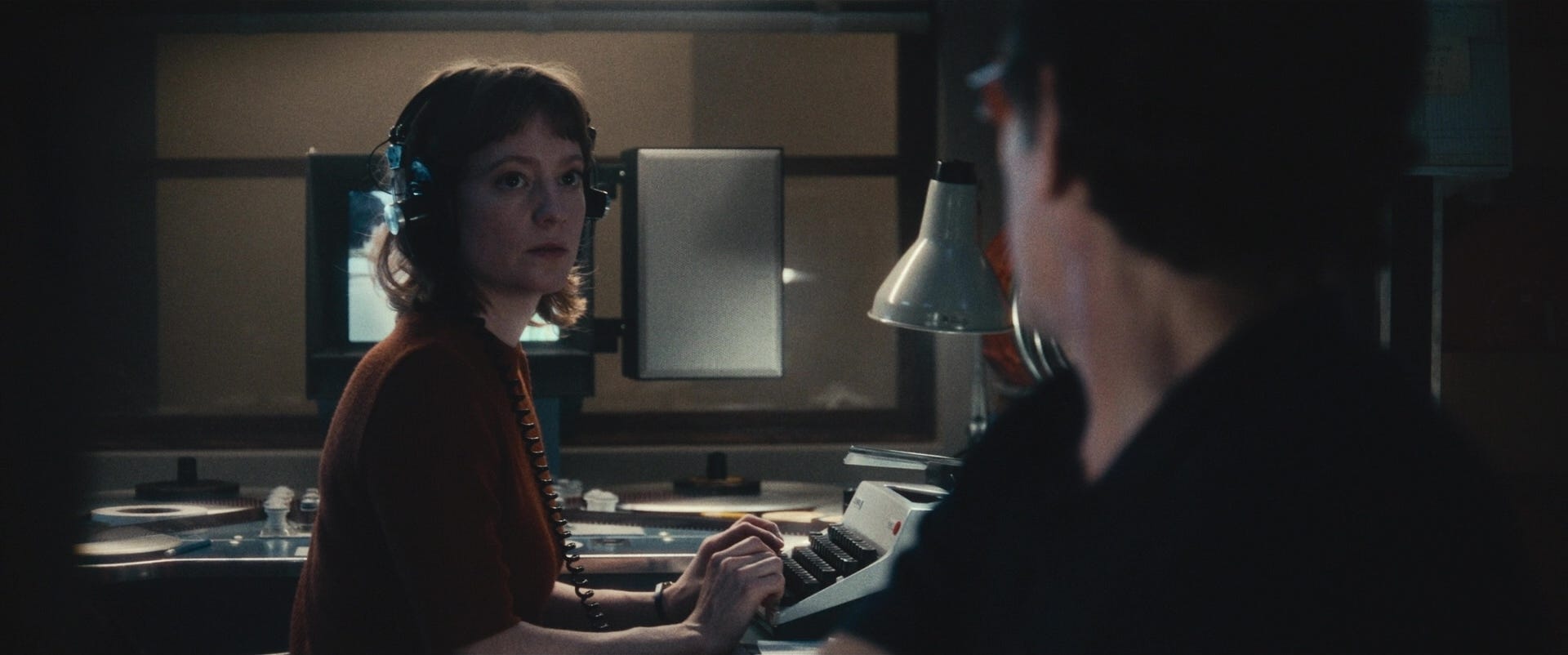
Taking notes seriously is not the same thing as taking them as sacrosanct and executing them literally. More than anything, a note is a symptom — it tells you something isn’t landing for the reader. But the note itself is almost never the diagnosis, and even more rarely the actual cure. If an exec says “I don’t like the ending,” the ending is probably not actually the problem. Something leading up to the ending is the problem, and the ending is just where they felt it. Your job is to find that and to fix it in a way that’s true to the thing you actually want to write. Sometimes the fix looks like doing exactly what’s been asked of you, but more often than not it doesn’t at all. But as long as you’re fixing what feels broken, you’re never going to hear a complaint about not taking the note literally.
This, of course, is not permission to ignore the notes. Please do not take “your job is not to transcribe” and twist it into “your job is do whatever you want, and stuff them.” Because that’s not the job. That would, in a sense, be easier. The job is actually to exist within both the art you want to make, and the reality that you’re doing so in a very expensive commercial medium. Ideally, you should be solving the problems the notes address. You should simply be doing it your way.
Which brings me back to Kaitlin’s question about her reps.
If it’s one note, on one project — that’s something solvable. But if it really is a never ending “this one didn’t quite work for us,” then that’s something else entirely. Something that warrants a serious conversation (which you are allowed to have, see last week’s newsletter). Because if it’s this way for everything, the question shouldn’t be “how do I fix this?” it should be “are we even trying to do the same kind of thing?”
One possibility is… yes, you are all still on the same page, and they’re just seeing a pattern before you the writer. This happens! My manager once told me “you never really just throw a fastball right down the middle, do you?” Which… ouch. But also, true!
But, the second possibility is… this relationship has run its course. A rep who’s tired of hearing from you, and tired of trying to sell you is going to stop trying. And there is nothing worse for a writer’s career than an unenthusiastic partner. People grow and change and so do writers and their agents. Sometimes we grow apart. And it’s not really something that writers can fix, when it does happen.
Here’s the test I use to tell the difference:
Can you find the version of their note that makes the work better — truer to what you’re trying to do, not just more palatable to them? If yes, you have a craft problem, and craft problems are solvable, usually by finding your own version of the third thing Phil needs on page one. If the note would require you to build something that isn’t yours anymore — if executing it means transcribing instead of writing, changing the entire thing it is that you do — you don’t have a craft problem. You have a relationship problem, and no amount of notes calls are going to fix that.
Both of these questions — Phil’s and Kaitlin’s — came up at the very first Hollyweird Hang this past Wednesday. Thank you to the 30+ people there who asked questions like this, about their craft, their careers, and the tricky parts of our business that exist somewhere between the two.
If you missed it, here’s the recording. (It’s standard def — I’ve got a ticket in with Zoom about that, promise the next one’s 1080p.) It’ll be up through July 15th, then it moves behind the paywall for good.
That’s what the Hang is for. Not a webinar. Not a lecture. An hour where you bring the actual thing you’re stuck on and we figure it out live.
First Wednesday of every month. Founding rate is $8/month instead of $10, locked in for as long as you stay subscribed — through July 15th only.
Can’t make it live? Recording lands in your inbox either way.