

You don't need to get better at pitching
hot take incoming

In 2021 I was pitching a biopic with a big star attached. We brought it to studios, financiers, big companies, small companies, I think something like 16 places. This took months. Ultimately… no takers.
That was just one project. Isn’t this career a numbers game? Aren’t you always saying that, Colby? Didn’t you say diversifying was the “one simple trick to survive in Hollywood?”
In 2021 I also pitched on a studio reboot of a kid’s franchise (which has conspicuously not been rebooted since this pitch), an adaptation of a horror novella with shiny director (and producer) attached, a big four quadrant thing, a big sci-fi studio job… the list goes on. You can read everything I did in 2021 here.
At the end of the year (when I wrote that review) I looked back and realized just how much time (months and months) of the year was spent chasing jobs to no avail.
Now… could I have gotten a little bit better at pitching some of these? Sure. Could I have chosen better, spent time on more commercially viable material? Maybe.
But I think there’s a larger force at play, and it’s one that we don’t really talk about enough in Hollywood.
As things get ever more conservative, maybe pitching is simply… not for everyone.
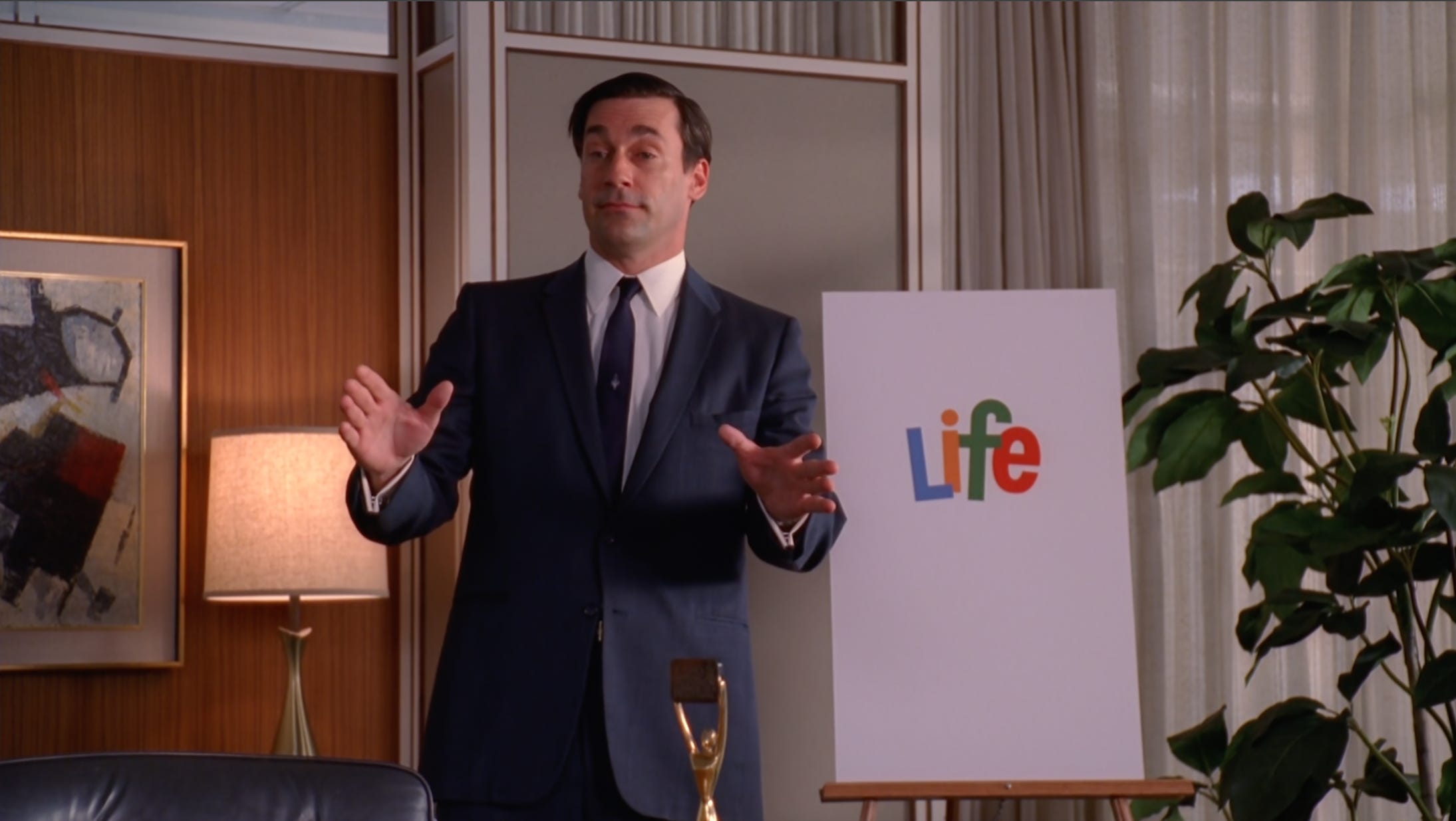
At the end of the day, a pitch is asking for trust. You’re speaking with someone — a producer, a star, a financier — asking them to invest time (and/or money, ideally money) in a promise. A promise that you will deliver something valuable. And the single most important factor in the calculus those people are doing, when millions of dollars are potentially on the line? It’s not your pitch. It’s not your “Why Now” or your “Why Me.” It’s your track record.
Have you done this kind of thing before?
Which means that the pitch, as a way of doing business, favors not only towards the people who are the best at sales, but also the people who are most well established.
Not only is the more established writer probably better at pitching (sorry they just probably are) but they also are coming in pre-vetted, with a track record that’s a little bit easier to bring to your boss and then your boss’ boss.
Hollywood has unfortunately become a business of risk mitigation. Just listen in on any quarterly shareholders call with these “movie” companies. It’s all about optimizing, lowering costs, and returning value to the shareholder. Not really cool ideas from really cool artists.
And the transition into McKinsey Optimization has meant there are simply fewer opportunities. It’s not just that LA production is down… there are fewer major movie releases. Fewer big movies, way fewer mid-size movies.
And as a result, there is a lot less assignment work.
The life blood of the Hollywood screenwriter for decades has been the OWA, or Open Writing Assignment, a job that a studio or production company with money would offer up to the best writer with the best pitch.
The pool of available Open Writing Assignments has substantially shrunk compared to even when I was starting out, which was substantially smaller than the 80’s, 90’s, and early 2000’s. As that pool shrinks, the resumes of the people you’re competing against get better and better. Because they have mortgages to pay (and yes, they came up in a time when a solid Hollywood career could still buy you a house). And the more you’re in direct competition with people who have already done this many times over, the less your really really good pitch is going to matter to a company’s bottom line. Why not choose the safer bet?
So to go pitch an idea, whether an assignment or an original, is harder than ever. And the time! The time is the real killer, because in the time that I developed probably 8-10 films for other people who didn’t ultimately hire me, I could have written 2 very good spec screenplays. Or gone off and directed a cool short film as a directing sample. Or heck, probably all three of those things. Plus some time to… I don’t know… have a life?
And this isn’t to say that all pitching is pointless. There are contexts where it makes sense. Especially in the circumstance where you have a preexisting relationship with someone, or they’ve specifically reached out to you because of your specific background or life experience, or if it’s a project you yourself have originated. If someone’s already sold on you, then yes, pitch away.
But this is not the situation most early career writers (myself in 2021 included) find themselves in. And when that’s the case, and when the entire system is deliberately tilted against you personally… I don’t know if “I need to try to pitch ideas, I need to make a pitch deck” is really where you should be focusing your time or energy. [Especially not the pitch decks]
Instead of doing that, instead of asking someone to gamble on you, with not enough evidence that it’s a good bet, you could sit down and make something.
Whether that’s a completed spec screenplay, or heck, an actual film, the actual proven item, the thing people can’t really deny… it isn’t a pitch.
The question I wish someone had asked me earlier: what would you do with this time if pitching weren’t an option? For most writers, the honest answer is… write!
Something you own. Something you care passionately about. Something you’d write whether someone was paying you or not. And those are almost always the most interesting. And… in the business of Hollywood, we must always be thinking about the business… something you own is always the most valuable.
Write that instead.
Before you go, just a reminder
Next Wednesday July 1st at 12PM PT is Hollyweird Office Hours, live on zoom. It’ll be a big group conversation in which I answer your questions to the best of my ability. They can be craft, they can be career, they can be the more philosophical kind of “how the heck do I just keep doing this?”
Whatever you’ve got, I’d love to try to get to it. If you’d like to attend, you can RSVP here to get the link emailed to you, and if you have a question, you can pop it in the form.
See you soon!
The question at the end is the one I needed to hear. What would you do if pitching weren’t an option? Write. ✍️ yep
OMG SO HAPPY TO FIND ANOTHER PROFESSIONAL WRITER TELLING IT LIKE IT IS WITH PITCH DECKS! They’re pointless!